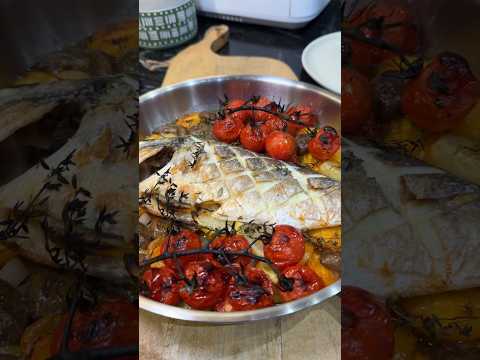
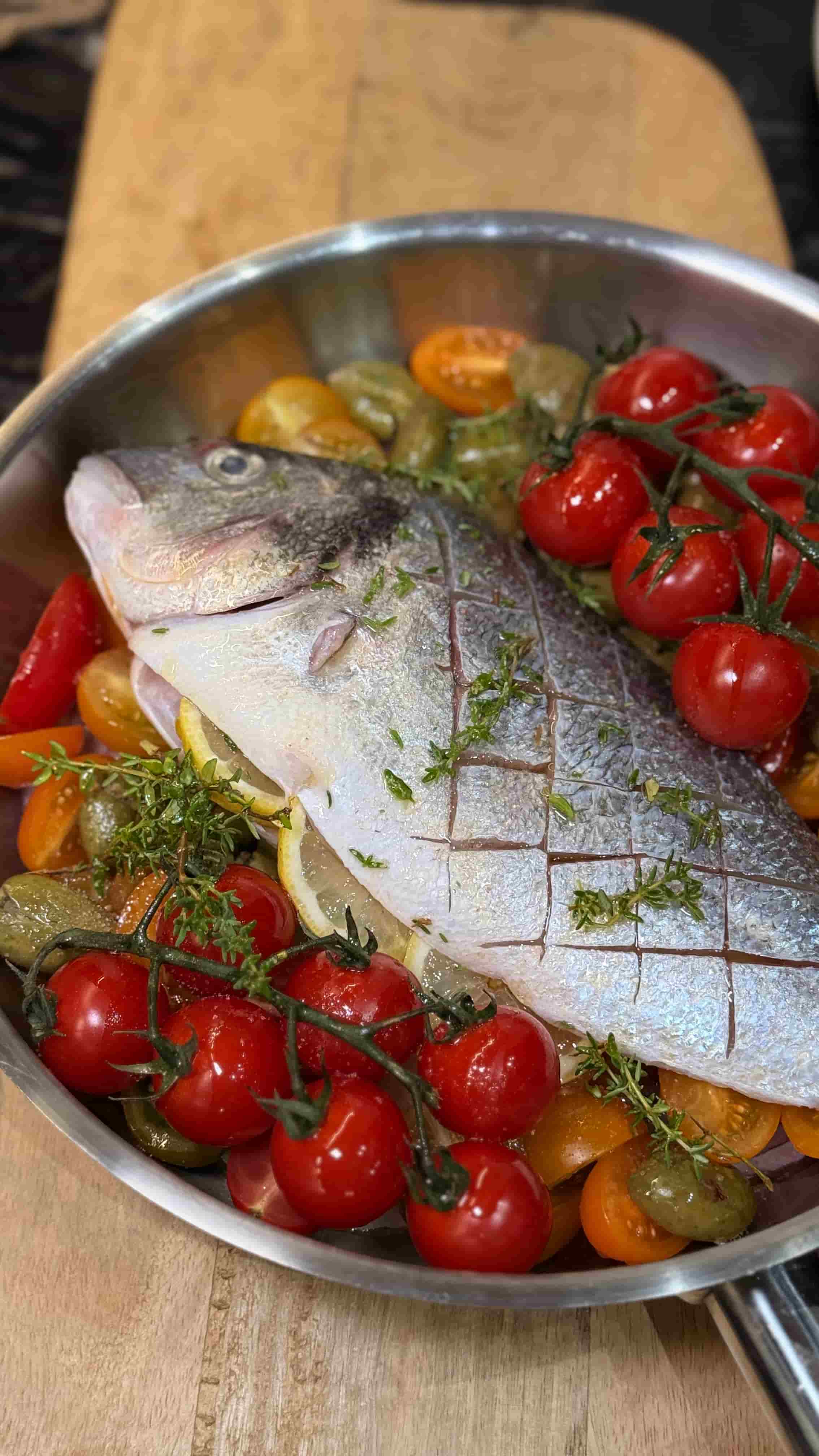
Mediterranean Baked Dorado Recipe
Dive into the vibrant flavors of the Mediterranean with this delightful baked dorado recipe, a dish that brings the sun-soaked coasts of Spain to your table. Dorado, also known as orada in Spain, dorade in France, or sea bream in English-speaking regions, is a prized fish celebrated for its versatility and delicate taste.
This recipe showcases the fish’s natural flavors, enhanced by the bright, fresh ingredients of cherry tomatoes, green olives, and aromatic thyme, all baked to perfection with a drizzle of olive oil. But why does this fish go by so many names, sparking debates across social media and culinary circles? Let’s explore the fascinating story behind dorado’s nomenclature, its flavor profile, and why it’s a beloved staple in Mediterranean cuisine.
The Name Debate: Why Dorado, Orada, or Sea Bream? The dorado, scientifically known as Sparus aurata, carries a variety of names depending on the region, sparking lively discussions among food enthusiasts, especially on platforms like X. In Spain, the fish is commonly called orada (or dorada), derived from the Spanish word oro, meaning “gold,” due to the characteristic golden stripe between its eyes. This shimmering feature is particularly prominent in the fish’s natural habitat along the Mediterranean and Atlantic coasts, making the name a poetic nod to its appearance. In France, it’s referred to as dorade or daurade, a term rooted in similar etymology, emphasizing its golden allure. In English-speaking countries, it’s often called gilt-head sea bream, highlighting the same golden mark.
The naming debate intensifies because of regional pride and culinary traditions. For instance, in Greece, it’s known as tsipoura, while in Italy, it’s orata—both names tied to local languages but referring to the same species. On social media, particularly in foodie communities on X, debates flare up when chefs or home cooks passionately defend their regional name, with some arguing that dorado evokes a more exotic, tropical vibe (confusing it with the unrelated Coryphaena hippurus, a colorful fish also called dorado or mahi-mahi). Others insist on sea bream for its scientific accuracy.
These discussions reflect not just linguistic differences but also cultural connections to the fish, as each region claims it as part of their culinary heritage. The truth? All names are valid, shaped by geography, language, and tradition, making dorado a truly global fish with a universal appeal.
Flavor Profile of Dorado: Dorado is cherished for its mild, slightly sweet flavor and firm yet tender flesh. Its taste is clean and oceanic, with a delicate, almost buttery texture that melts in the mouth when cooked properly. Unlike stronger-flavored fish like mackerel, dorado’s subtlety makes it an ideal canvas for Mediterranean ingredients like olive oil, lemon, and herbs, which enhance without overpowering its natural essence. When baked, as in this recipe, the fish absorbs the tangy, briny notes of olives and the sweetness of roasted cherry tomatoes, creating a harmonious balance of flavors. Its versatility allows it to shine in simple preparations or more complex dishes, making it a favorite in coastal kitchens.